The Boy Who Forgot His roots A Story About Peer Pressure, Lost Purpose, and a Chance Meeting That Changed Everything His mother had packed his bags herself. That detail stayed with Arjun Verma — not as a memory he chose to revisit, but as one that came to him in the dark, uninvited, in the …
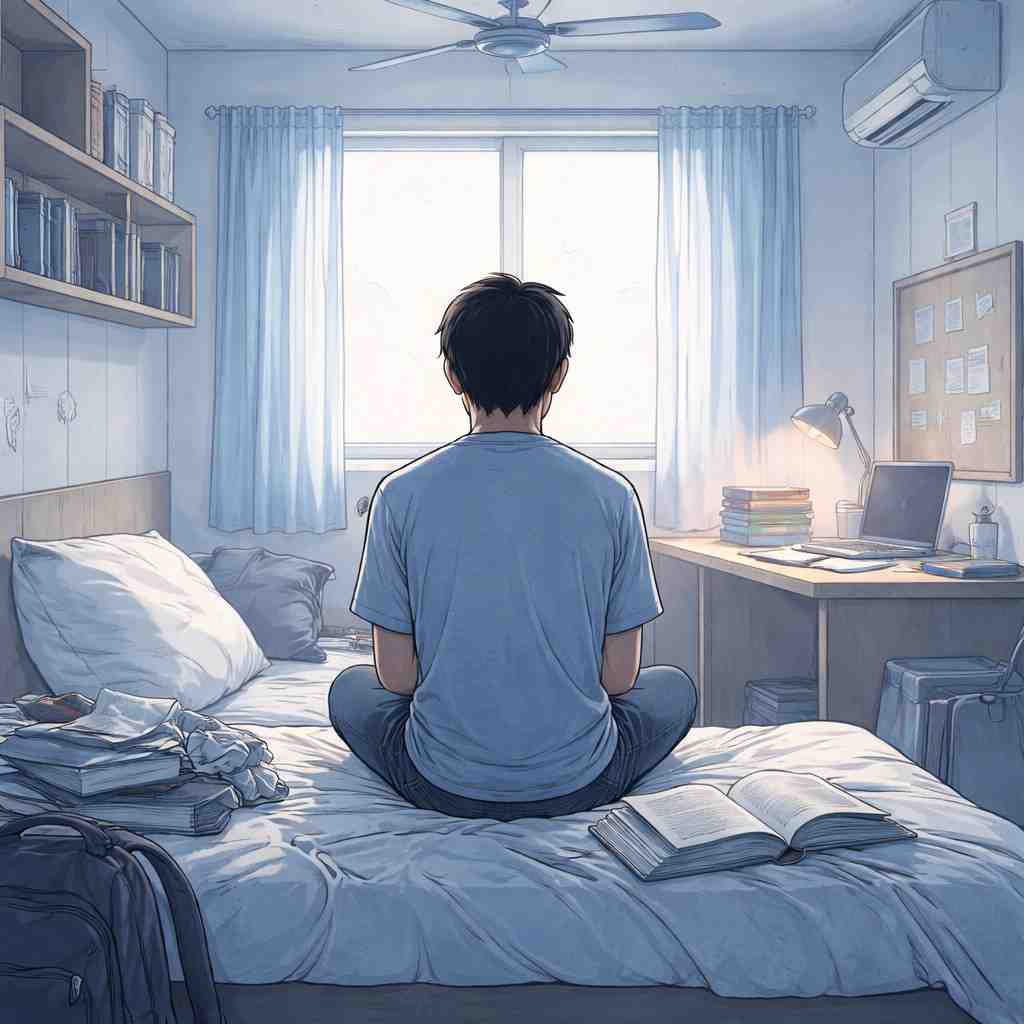

The Boy Who Forgot His roots
A Story About Peer Pressure, Lost Purpose, and a Chance Meeting That Changed Everything
His mother had packed his bags herself.
That detail stayed with Arjun Verma — not as a memory he chose to revisit, but as one that came to him in the dark, uninvited, in the way that only the truest things do.
She had folded each shirt carefully, placed his study material in a separate bag, tucked a small photograph of Saraswati Mata between his notebooks — quietly, thinking he wasn’t watching. He had seen. He hadn’t said anything. He was eighteen and embarrassed by tenderness in those days.
She had sent him to Mysore with everything she had — not money, they didn’t have much of that — but with twenty years of her own unfinished dreams carefully pressed into his ambition. His father, a primary school teacher in a small UP town, had taken a loan to fund the first year of coaching. His younger sister had quietly given up her tuition classes so that money could go toward Arjun’s preparation.
A family had reorganized itself around one boy’s dream.
And that boy was now sitting outside a temple at 4 in the morning, not because he was spiritual, but because he had nowhere else to go.
What Had Happened
The first month in Mysore had been honest.
He had studied. He had made notes. He had felt the particular, clean satisfaction of a young person who believes entirely in what he is working toward. The IAS dream was not vague for Arjun — it was specific. He wanted to go back to his district someday. As an officer. To fix the things that his father had quietly accepted as unfixable. The broken roads. The school with no teachers. The collector’s office where ordinary people waited for hours on plastic chairs, ignored.
He had a reason. A real one.
Then the hostel happened.
Not all at once — slowly, the way fog moves in. First it was just staying up late, talking. Then it was skipping morning sessions because sleep had become impossible to fight. Then it was the parties that appeared out of nowhere on Friday nights — someone’s birthday, someone’s selection, someone’s breakup, someone’s mood. The reasons multiplied. The occasions were always there.
He had resisted at first. Truly resisted. He would sit in his room with his book while the music from three floors above came down through the concrete like a heartbeat. He would tell himself: I am different. I have a purpose.
But resistance, he discovered, is exhausting when you are doing it alone.
The others weren’t bad people. That was the part no one tells you. The friends who pulled him toward the parties were not villains — they were just young, just uncertain, just filling the silence of being away from home for the first time with noise and togetherness. He understood them. He liked them. And liking them made it harder to be different.
The first time he drank was at Rohan’s birthday. He told himself it was once.
The first time he smoked was on a terrace at 1 AM when someone handed it to him and walking away felt, in that moment, more complicated than accepting.
The first time he sat in a circle with four others sharing something that smelled like nothing he had encountered before — he told himself he had simply been curious. That he was studying human experience.
He was lying to himself. He knew it even then.
But knowing and stopping are not the same thing. That gap — between knowing and stopping — is where lives get quietly derailed.
Three months passed. His test scores, which had been climbing, leveled. Then they dipped. His mentor at the coaching institute called him in and said, not unkindly: “Verma, aap kahan ho? Your essays are getting shallow. Something has shifted.”
He had nodded and said everything was fine.
That night he called his mother. She asked how the preparation was going. He said: “Sab theek hai, Maa.” She said she was proud of him. That his father had been telling everyone in the colony that his son was going to be an IAS officer.
He kept the phone on the table after the call and looked at it for a long time.
Something in that moment cracked open — not dramatically, not with tears, but with a slow, terrible clarity. Like a man who has been walking in the wrong direction who suddenly recognizes a landmark — and realizes how far he has gone.
He didn’t sleep that night. He packed a small bag in the morning, told no one, and took the first bus to Mysore city from the hostel. He needed to be somewhere old and quiet and indifferent to his confusion. He found himself at the temple without entirely planning it.
4 AM at the Temple Steps
He sat on the lowest step and did not pray.
He didn’t know how anymore. Or perhaps he had never really known — he had watched his mother pray, had absorbed the rituals of his household the way children absorb language, without examining the grammar. Now, sitting here alone, he could not remember the words.
So he simply sat. The city was silent. The temple rose above him in the dark — enormous, ancient, unmoved by anything. It had watched centuries pass. Empires. Ordinary men with ordinary confusions. It was not impressed by his crisis.
Somehow that helped.
He took out the Saraswati photograph from his bag — the one his mother had slipped between his notebooks. He held it and felt, for the first time in months, the full weight of what he had been slowly trading away. Not just the IAS dream. Something more personal than that. The version of himself his family had seen when they waved him off at the station. The boy who had waved back from the train window, certain.
He was not certain anymore.
He put his face in his hands.
He did not hear the footsteps.
The Sadhu Who Should Not Have Been There
“You are sitting in the dark for a reason,” said a voice beside him. “Or sitting in the dark because you have run out of reasons.”
Arjun looked up.
An old man — perhaps sixty, perhaps older — had settled onto the step beside him with the ease of someone who sits on temple steps the way other people sit on office chairs. Saffron dhoti. Rudraksha mala. A danda resting against the stone. The face of a man who had, at some point long ago, stopped being in a hurry.
“I come here every morning,” the sadhu said, not looking at Arjun but at the temple door, where the lamp flame moved gently in the dark. “At this hour, the temple belongs to whoever needs it most.”
Arjun said nothing. His throat was tight.
“How old are you?”
“Nineteen.”
A pause.
“Tell me,” the sadhu said. “What did you want to be when you were ten?”
It was such an unexpected question that Arjun answered it honestly, without defense: “An IAS officer.”
“And now?”
Arjun looked at his hands. “I don’t know anymore.”
The sadhu was quiet for a moment. Then: “What happened between ten and now?”
And Arjun — to his own surprise, to the surprise of some part of himself that had been keeping everything very carefully contained — began to talk. About the hostel. About the friends. About the slow drift. About the test scores. About his father’s loan. About the photograph in his bag. About the second cup of chai his mother had stopped making because there was no one else to give it to. He talked for a long time, halting in places, his voice breaking once and then steadying.
The sadhu listened. Completely. The way very few people ever listen — without preparing his response, without checking the time, without reassurance that cut the other person off before they had finished. He simply received everything Arjun said and held it without judgment.
When Arjun finished, the sadhu said: “I know what you are going through. Not as theory. I know it because I went through it too.”
Arjun looked at him.
“My name is Swami Prakashananda now,” the sadhu said. “But I was Vivek Sharma once. Engineering from BITS Pilani. MBA from IIM Ahmedabad. Twelve years at McKinsey — New York, Singapore, London. A flat in Powai. A salary that made people at parties go quiet when I mentioned it.”
Arjun stared.
“We were college contemporaries with a friend of yours — Rajan Mehta from your coaching batch. He told me a boy named Verma had been coming to the temple in the mornings and sitting alone. I came to find you.”
The law of serendipity had been at work, quietly, before either of them arrived.
What the Sadhu Said
Swami Prakashananda — Vivek — looked at the temple door for a long moment before speaking.
“The Bhagavad Gita begins,” he said, “with Arjuna sitting exactly where you are sitting. Not physically. But spiritually. In the middle of the battlefield, surrounded by people he cares for, paralyzed, unable to act, having forgotten why he came. Chapter One of the Gita is the most human chapter ever written — it is an eighteen-year-old boy’s crisis put into Sanskrit.”
He paused.
“Krishna doesn’t tell Arjuna to stop feeling. He doesn’t say ‘just work hard.’ He asks him something more fundamental: Kutah tva kashmalam idam vishame samupasthitam — where has this weakness come from, at this critical moment? Who are you, beneath all the confusion?”
Arjun was quiet.
“You have not lost your dream,” the sadhu said. “You have lost contact with yourself. Those are different problems with different solutions.”
He turned to look at Arjun directly for the first time.
“The peer pressure you are describing — the parties, the substance, the drift — Western psychology calls it social identity theory. When a young person enters a new environment, the need to belong becomes temporarily stronger than the need to achieve. Henri Tajfel, who developed this theory, showed that humans will reshape their behaviour, their values, even their stated beliefs — to belong to a group. This is not weakness. This is biology. You are wired for tribe. The problem is that your tribe, right now, is not going where you are supposed to go.”
“So what do I do?” Arjun asked. “Isolate myself? Stop having friends?”
“No,” the sadhu said firmly. “That is the wrong answer. The Gita does not tell Arjuna to leave the battlefield. It tells him to act rightly within it. Avoidance is not the solution to temptation — because temptation follows you inside. What you need is not walls. What you need is a center.”
He let that sit for a moment.
“Abraham Maslow — an American psychologist — spoke of a hierarchy of needs. The need to belong sits in the middle of his pyramid. Below self-actualization, below esteem, but very much there. You cannot simply override it with willpower. Willpower runs out. Ask any addict — ask anyone who has tried to white-knuckle their way through temptation. Roy Baumeister’s research showed conclusively that willpower is a depletable resource. Every decision you make in the day uses some of it. By 2 AM, it is nearly gone. This is why you say yes at midnight to things you would have said no to at 8 in the morning.”
“Then how—”
“You don’t fight it. You replace it. The Gita calls this vyavasayatmika buddhi — single-pointed intelligence. Not suppression of desire. Replacement of it with something stronger. Something that lights you from inside.”
The lamp beside the temple door flickered. Both of them watched it.
“Your mother packed that photograph herself,” Vivek said softly, nodding toward the Saraswati image in Arjun’s hand. “And you watched her do it. That moment — hold that moment. Not as guilt. Guilt will break you. But as fuel. The Gita makes the distinction clearly: Shochan shocyaan — you grieve for what does not deserve grief. Your dream is not dead. Your family’s love is not conditional on your perfection. You have simply drifted. Drifting is not failure. Failing to course-correct is.”
The Ten Anchors
The sky was beginning to lighten — that very first suggestion of dawn, so faint it might have been imagined. Vivek spoke steadily, simply, the way a man speaks who has no performance in him left.
“The tradition gives us the concept of dharana — the practice of holding. Holding your focus the way a lamp holds its flame. Not forcing it. Not performing it. Simply returning to it, again and again, every time the wind moves it.”
“Practically,” he said, “here is what saved me when I was lost — and what the scriptures and psychology both agree on.”
One. Return to your why — every single morning. Before the phone. Before the news. Before any voice reaches you. Five minutes. Sit with the question: Why am I here? What is this for? The Gita calls this svadhyaya — self-study. Not as punishment. As orientation. A compass checked daily never loses north.
Two. Understand what is actually happening in your brain. You are nineteen. Your prefrontal cortex — the part that manages long-term thinking, consequence, delayed gratification — is not fully developed until twenty-five. This is not an excuse. It is information. Know that in environments of stimulation and social pressure, your brain will reliably choose the short-term. So engineer your environment before your brain gets to choose. Remove the situations before you need willpower to navigate them.
Three. Choose your tribe with your eyes open. The Bhagavata Purana says: Sangat sanjayate kama — from company, desire is born. You will become the average of the five people you spend most time with. This is not philosophy — it is neuroscience. Mirror neurons in your brain literally copy the emotional and behavioral patterns of those around you. Choose accordingly. You do not need to reject your friends. But find one or two who are also serious. Even one is enough.
Four. Do not try to be perfect. Try to be consistent. The biggest trap for young aspirants is the all-or-nothing mindset. One bad week becomes: “I have failed, I might as well give up.” The Gita says: Yoga karmasu kaushalam — excellence is in the sustained doing, not in any single act. Missing one day of study is not the problem. Missing it and then catastrophizing and then staying in the collapse — that is the problem.
Five. Build a small ritual that is only yours. The pre-dawn hour — Brahma muhurta — that you are sitting in right now, even in confusion, is sacred. Every tradition, every serious achiever across history, guards these early hours fiercely. Not because of superstition. Because it is the only hour that belongs entirely to you before the world claims you. Make one thing sacred. One hour. One practice. And protect it.
Six. Write to your younger self. Or to your mother. Or to the ten-year-old who wanted to fix the broken roads of his district. Not as performance. Not to post anywhere. Privately. Honestly. William James — the father of modern psychology — said: “The greatest revolution of our generation is the discovery that human beings, by changing the inner attitudes of their minds, can change the outer aspects of their lives.” Writing forces honesty. And honesty is the beginning of all change.
Seven. Understand that resisting is not the same as running. You do not need to avoid your friends, leave the hostel, become a monk. The Chandogya Upanishad says: Tat tvam asi — Thou art That. The divine is inside you, not outside in some pure environment you must find. The strength to stand differently inside a room of pressure — that is the real test. And it is built slowly, by returning to yourself enough times that returning becomes your default.
Eight. Let your guilt become gratitude. Right now you feel guilty — about your father’s loan, your mother’s hope, your sister’s tuition. That guilt, if you carry it as punishment, will crush you. But if you translate it — if you feel it as the full weight of love that was invested in you — it becomes something else. It becomes the most powerful motivator there is. Not fear of failing them. But love for what they gave you.
Nine. Ask for help. The hardest thing for a young man who has been told he is the family’s hope. The Mahabharata shows us that even Arjuna — the greatest warrior of his age — asked for help. He sat down in his chariot and said: I don’t know what to do. And that asking — that honest, humbled asking — is what summoned the Gita. The most important book in human wisdom was born from one young man’s willingness to say: I am lost. Help me.
Ten. Remember that the drift is not your identity. Four months of going off course does not define you. The Gita’s most luminous promise — na hi kalyana-krit kashchit durgatin tata gacchati — no one who chooses the good, even once, will come to ruin. You are here. At a temple. At 4 AM. Looking for something true. That impulse — that reaching — is the most important fact about you right now. Not the parties. Not the drift. This.
Dawn
By the time Vivek finished, the sky had turned. Not fully light — but that color between night and morning that has no name in English, only in the old languages. The color of something beginning.
The temple bells rang.
Arjun sat very still. Something had settled in him — not resolution exactly, not a plan, but something more foundational. A sense of ground beneath his feet that he had not felt in months.
“Why did you leave McKinsey?” he asked finally. “With everything you had built?”
Vivek smiled. The first full smile of the morning. “Because I achieved everything I thought I wanted and discovered I had been answering someone else’s question. The world had given me a question — how successful can you be? — and I had answered it brilliantly. But I had never asked myself the prior question.” He looked at the temple. “The prior question is: successful at what, and for whom, and why?“
He stood, slowly, picking up his danda.
“You still have time to ask the prior question first. That is your extraordinary advantage. Do not waste it.”
He touched Arjun’s head once — the way a father does, or a teacher, or the universe when it is being kind — and walked toward the temple entrance, which was now opening for the morning aarti.
Arjun sat alone on the steps.
He took out his notebook — the one with GS notes, half-empty for three months — and opened to a blank page.
He wrote three words.
Why am I here?
Then he sat with the question. The bells rang. The lamp burned. The sun arrived over the temple’s eastern wall and fell on the stone steps in a long, warm line — and then, a little further, on the boy sitting there, who was beginning, slowly, to remember.
One Year Later
He cleared the UPSC Prelims.
He called his mother from outside the exam center. She didn’t say much. She made a sound that was not quite crying and not quite laughing — the sound a person makes when something they prayed for in the dark has finally arrived in the light.
His father said: “Main jaanta tha.” I always knew.
His sister said: “Buy me a good phone when you’re an officer.”
Arjun laughed. The kind of laugh that carries everything — relief, gratitude, the weight of the journey, the improbable grace of a 4 AM temple and a man who should not have been there.
He went back to Mysore one more time before Mains preparation began. To the same temple. The same steps.
He sat in the pre-dawn dark and asked the question again.
Why am I here?
And this time, the answer came clearly, quickly, without confusion:
For the boy back in my district. For the school with no teachers. For the person waiting on a plastic chair who deserves better. For my father, who spent his whole life teaching and deserves to see what teaching becomes. For myself.
He opened his notebook.
He began to write.
“Uddhared atmanatmanam natmanam avasadayet — Lift yourself by yourself. Do not let yourself fall. For the self alone is the self’s greatest friend, and the self alone is the self’s most dangerous enemy.” — Bhagavad Gita, 6.5
To every young person sitting on some temple step at 4 AM, not sure why they came — you came because something in you still knows the way. Trust that. Follow it home.