Let’s start with something uncomfortable. A 7-year-old today can unlock a smartphone faster than you can unlock your own thoughts in silence. Not impressive. Not scary either.Just… normal now. And that’s exactly the problem. The Shift Nobody Talked About Let’s zoom out for a second. 200 Years Ago A child’s “screen time” was… the sky.Entertainment …
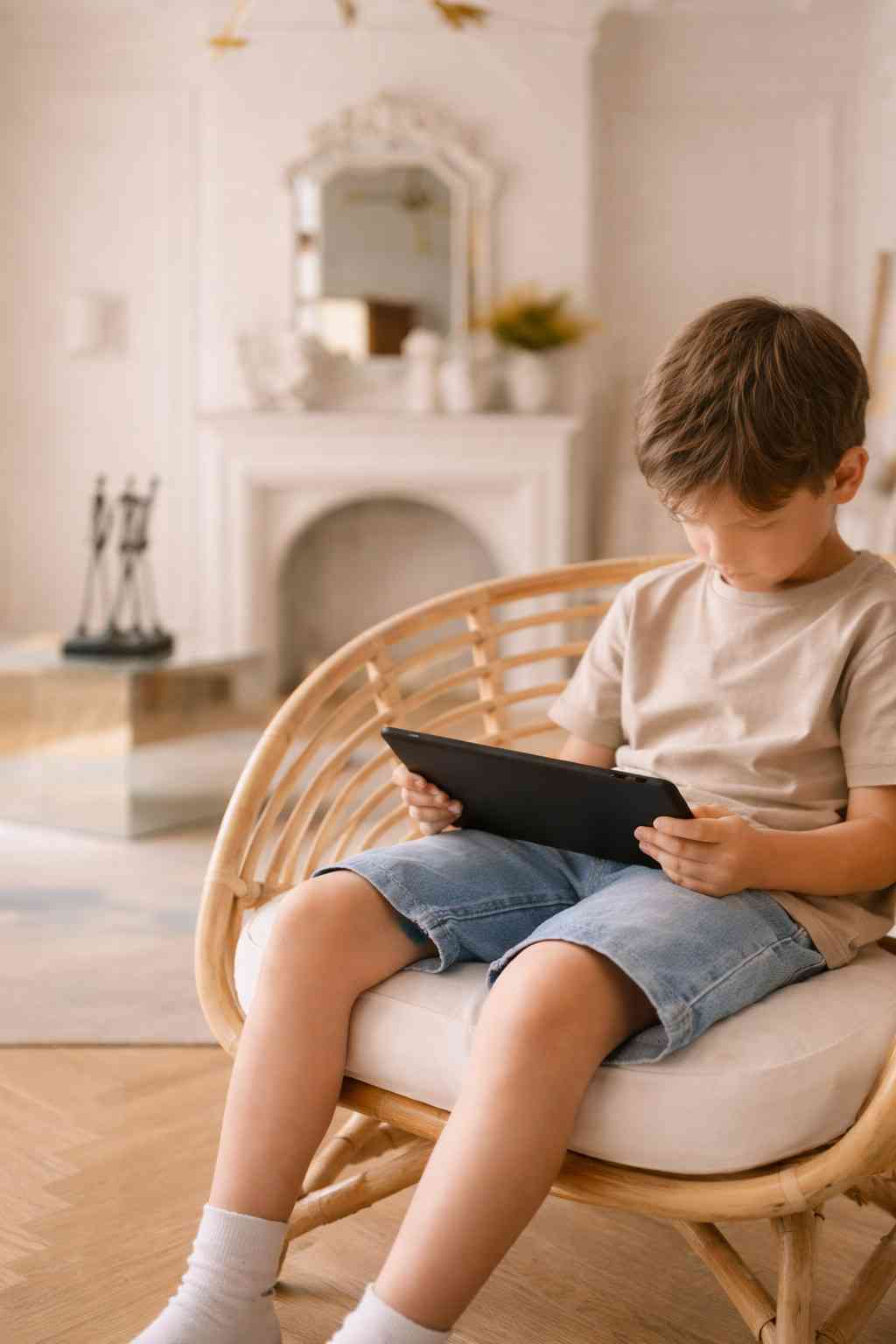

Let’s start with something uncomfortable.
A 7-year-old today can unlock a smartphone faster than you can unlock your own thoughts in silence.
Not impressive. Not scary either.
Just… normal now.
And that’s exactly the problem.
The Shift Nobody Talked About
Let’s zoom out for a second.
200 Years Ago
A child’s “screen time” was… the sky.
Entertainment = खेत, पेड़, नदी, कहानियाँ।
- Attention span? Long.
- Patience? Natural.
- Learning? Through observation and imitation.
They didn’t need “focus techniques.” Life itself was the training.
50 Years Ago
Television entered. One screen. One family. One schedule.
- Cartoons came at fixed times.
- Parents controlled access, not algorithms.
- Boredom still existed—and was respected.
You couldn’t binge. You had to wait.
And waiting quietly builds emotional strength.
Last 20 Years (The Real Disruption)
Then came: smartphones, Wi-Fi, social media, short-form content.
Now:
- Content is infinite
- Access is personal
- Control is gone
Earlier, children adapted to life.
Now, life is adapting to children’s impulses.
And busy parents?
They didn’t even notice when the shift happened.
Let’s Get Real: Why Parents Are Trapped
This is not about “bad parenting.”
It’s about smart people caught in a smarter system.
You give your child a phone because:
- You need 30 minutes of peace
- You’re on a work call
- You’re exhausted
Fair enough.
But here’s the twist—
Tech companies are spending billions to make sure your child never wants to leave that screen.
That’s not convenience.
That’s competition.
5 Hidden Impacts (With Real-Life Situations)
1. Micro Attention, Macro Frustration
Scene:
You ask your child to sit and study.
Within 5 minutes: “I’m bored.”
But the same child watches reels for 2 hours straight.
What’s happening?
The brain is rewired for constant novelty.
According to attention research inspired by thinkers like Daniel Kahneman,
the brain prefers easy rewards over effortful focus.
Result:
Anything slow (studies, reading, conversations) feels painful.
2. Emotional Shortcutting
Scene:
Child is crying. Instead of asking “What happened?”
We say: “Take my phone.”
Problem solved? No. Problem postponed.
Psychologists like Jonathan Haidt highlight this pattern—
children today are avoiding discomfort instead of learning from it.
Result:
- Low emotional tolerance
- Quick anger
- Dependence on distraction
3. Conversation Anxiety
Scene:
Guests come home. Child avoids eye contact, goes silent, or escapes to the phone.
But online? Confident, expressive, active.
Why?
Because real conversations are unpredictable.
Screens are controlled environments.
Result:
- Weak social confidence
- Fear of judgment
- Low real-world presence
4. Sleep is Broken (And Nobody Notices)
Scene:
Child says, “I’m just watching one last video.”
One becomes twenty.
Blue light delays sleep cycles.
Even American Academy of Pediatrics warns about screen exposure before bedtime.
Result:
- Irritability
- Low energy
- Poor academic performance
5. Creativity is Replaced by Consumption
Scene:
Give a child a blank notebook.
Old generation: started drawing, writing, imagining.
Today: “What should I do with this?”
Because they are used to being entertained, not creating entertainment.
Result:
- Low curiosity
- Reduced imagination
- Passive thinking
Now Let’s Bring in the Vedic Angle (This is Powerful)
In ancient Indian wisdom, especially in concepts like “Brahmacharya Ashram”,
a child’s early years were meant for:
- Discipline (नियम)
- Focus (एकाग्रता)
- Sense control (इन्द्रिय संयम)
Today, what are we doing?
We are giving unlimited stimulation to all senses:
- Eyes → screen
- Ears → noise
- Mind → constant distraction
In simple terms:
We are raising overstimulated minds in underdeveloped emotional systems.
5 Smart, Practical Solutions (No Gyaan, Just Strategy)
1. The “Delay, Don’t Deny” Rule
Don’t say: “No phone.”
Say:
“Phone मिलेगा… but after 30 minutes.”
This builds impulse control.
Small delay = big mental strength.
2. Create “Boredom Windows”
Yes, schedule boredom.
Example:
- 5 PM – 6 PM: No screen, no structured activity
Let the child figure it out.
This is how problem-solving develops.
3. Use the “Mirror Effect”
Before correcting your child, check your own habits.
If you’re scrolling during dinner,
your child is learning—not listening.
4. Replace Dopamine Sources
You can’t remove screens without replacing the reward.
Try:
- Physical games
- Creative challenges
- छोटी responsibilities (watering plants, organizing things)
Make real life slightly more interesting than the screen.
5. Teach Awareness (Not Just Rules)
Instead of saying:
“Phone मत चलाओ”
Ask:
- “How do you feel after 2 hours of screen?”
- “Did you enjoy it or just pass time?”
This builds self-awareness, which is more powerful than control.
Final Reality Check
You don’t need to become a “perfect parent.”
You just need to become a conscious one.
Because the biggest risk is not that your child will use technology.
The biggest risk is:
They will never learn how to live without it.
And maybe, just maybe…
The goal is not to raise a child who is smart with gadgets.
But someone who is
calm without them.
Image Credit :- AI Generated , Original Source- FreePik.com
Be the first to read my stories
Get Inspired by the World of Interior Design
Thank you for subscribing to the newsletter.
Oops. Something went wrong. Please try again later.